USS Abraham Lincoln's Record Deployment Puts Spotlight on the True Cost of the Iran War
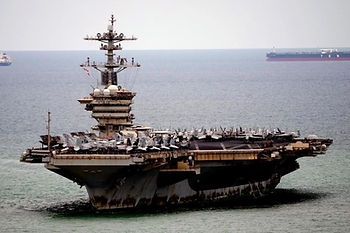
A single aircraft carrier's grueling nine-month deployment has become a flashpoint in Washington, raising hard questions about money, military readiness, and the human toll of a war that shows no signs of ending soon. The USS Abraham Lincoln's journey — from a routine patrol to a record-breaking stretch at sea — offers a rare window into what America's ongoing conflict with Iran is actually costing.
The Lincoln departed San Diego in November and was originally expected back home by May. That plan changed when the ship was redirected into the Iran war. By the time it finally reached port in Thailand in mid-August, the carrier had spent more than 280 days at sea — including a record-setting 200 consecutive days in a combat zone without a single port call. Photos of the ship showed its hull streaked with rust. The Lincoln is now headed back to San Diego rather than returning to the fight.
How Much Is This Costing Taxpayers?
The financial figures attached to the Lincoln's deployment are significant. Elaine McCusker, a former Pentagon comptroller, estimated the carrier and its air wing were operating at approximately $5.5 million per day, putting the total cost of the 269-day mission close to $1.5 billion. Defense analyst Jennifer Kavanagh of Defense Priorities placed the daily cost during active combat operations even higher — as much as $12 million.
For the sailors aboard the Lincoln, the personal financial compensation looks very different. Crew members received roughly $400 a month in extra sea pay, a $250 monthly family separation allowance, and up to $225 more per month for serving in an imminent-danger zone.
The Lincoln's costs are just one piece of a far larger financial picture. The Pentagon has placed direct Iran war costs at $41.75 billion since fighting began on February 28 — and that number is still climbing. The administration is also requesting an additional $67 billion supplemental. Independent estimates that factor in troop deployments, equipment losses, and reconstruction push the real total closer to $200 billion.
All of this is happening as the national debt has surpassed $39 trillion and the federal deficit is on track to exceed $2 trillion this fiscal year — a level the nonpartisan Committee for a Responsible Federal Budget has described as unusual outside of a recession.
What Sailors and Their Families Experienced
Beyond the budget numbers, families of Lincoln crew members have reported difficult conditions during the deployment. According to accounts detailed by Stars and Stripes, sailors dealt with broken plumbing, food shortages, and extended periods without hot water. Mental health concerns have also grown after so many back-to-back days without a meaningful break.
The Navy has offered a more restrained assessment. Acting Navy Secretary Hung Cao said the deployment involved a "small number" of mental health cases and no deaths, characterizing the extension as driven by mission necessity. CENTCOM's Admiral Brad Cooper visited the ship and praised the crew's performance while acknowledging the deployment had been demanding. The Navy has also pushed back on some reports, stating it has not identified an increase in reported suicidal ideation aboard the vessel.
RAND Corporation's Bradley Martin cautioned that some of the most significant costs may not surface right away, warning that the deployment could accelerate maintenance needs and cause lasting damage to military retention and morale — impacts that do not show up neatly in any single budget line.
Congress Is Starting to Ask Questions
The Lincoln's deployment is unfolding in the context of a war that Congress never formally authorized. When the question came to a vote, the House passed a resolution limiting war powers 215 to 208, and the Senate followed 50 to 48, with Republican Senators Rand Paul, Susan Collins, Lisa Murkowski, and Bill Cassidy joining Democrats in both chambers. Since fighting began, 18 U.S. service members have been killed and 757 wounded.
Sen. Richard Blumenthal (D-Conn.) and Sen. Ruben Gallego (D-Ariz.) have pushed for a bipartisan Congressional oversight visit related to the Lincoln's deployment. Rep. Don Bacon has separately called for a closer look at how and why the deployment was extended.
The war's financial pressures have also spilled into debates over veterans' benefits. A House-passed bill would cut disability coverage for more than 1.5 million future veterans. The Senate also blocked expanded benefits for more than 50,000 combat-injured veterans under the Major Richard Star Act.
Americans far from the Persian Gulf are also feeling the effects. Gas prices have risen more than 47% since the war began, with the average household paying roughly $447 more for fuel since February. Whether the Lincoln's record deployment ultimately leads to a serious reckoning over war costs — or quietly becomes just another data point in an ever-growing bill — may depend on how hard lawmakers are willing to push for answers.


